by Ishaan Raghav
In its ethereal splendour, language is a profound architect of human consciousness, shaping our narrative of existence. Yuval Noah Harari in “Sapiens” attributes the global conquest of Homo sapiens largely to our unique linguistic capabilities. This lexicon we wield is both a mirror and a window, enabling us to delve into the past while foraging into the future. It is the bedrock of human interaction, the genesis of religion, culture, and science, crafting a legacy that propels our relentless pursuit of knowledge. My linguistic identity, rooted in the Dravidian tongue of Kannada, has been pivotal in sculpting who I am today. Join me as we delve into the realm of languages and, in turn, into ourselves.
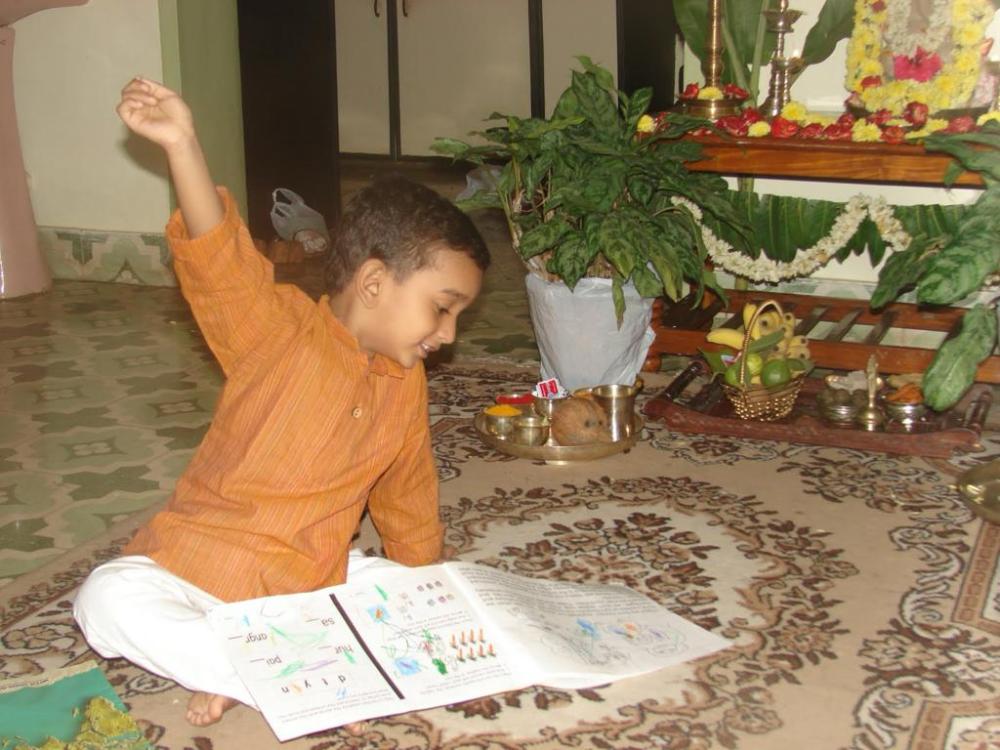
From my earliest memories, Kannada was the key to the outside world. Growing up in urban India, one might expect English or Hindi to dominate, but my familial environment steeped me in Kannada. Surrounded by this language, it became integral to my thinking and personality. The rich literary tradition of Kannada explored in school, instilled an appreciation for education, art, and literature, shaping a community of diplomatic, courteous individuals deeply connected to philosophy and literature.
Language intertwines with culture, which mutually influences each other. It carries a culture’s beliefs, values, and practices, serving as a high-speed rail network transmitting norms and customs across generations. In my case, Kannada’s distinct idioms and proverbs reflect my culture’s devout and dynamic nature, as encapsulated in our daily mantra “Kayakave Kailasa” (Work is Worship).
Venturing beyond my comfort zone to learn new languages like English and Spanish added different facets to my identity. English, reflecting British cultural influence, honed my analytical skills. In contrast, Spanish’s lyrical rhythm brought forth a more dynamic and spontaneous side of my personality. Daily code-switching between English, Spanish, and Kannada became a cultural ballet, enabling me to navigate various contexts with linguistic dexterity.
In the digital age, technology has become a steadfast ally in language preservation, protecting not just personal identities but global communities. Digital platforms serve as vibrant repositories for languages, fueling a renaissance of minority languages and acting as custodians of linguistic treasures. For example, languages in the New World like Navajo or Hawaiian have the internet to thank as their saving grace, due to efforts of websites such as Reddit and Omegle allowing for such communities to communicate with one another. This era has not only stemmed the erosion of linguistic diversity but also empowered communities to redefine their narratives and preserve their linguistic identities.
In conclusion, language, with its myriad of facets, is the cornerstone upon which identities are forged. It shapes perceptions, moulds experiences, and reflects our cultural and personal narratives. Through its rich tapestry of words, language offers a unique lens into the soul, harmoniously weaving together history, culture, and individuality, painting the portrait of our unique selves on the canvas of humanity.
 The Casual Observer